Grid-tied versus hybrid solar
Compare lower-cost daytime savings with higher-cost backup-ready systems.
Author
SolarGabay Editorial Team — independent consumer-focused writers who translate technical sources into practical homeowner guidance.
Technical review
Reviewed against the published methodology, source hierarchy, and stated limitations. This is educational guidance, not site-specific engineering.
Update history
Last reviewed July 20, 2026. Corrections are logged through the public corrections process and material changes update this date.
View correction policyPractical answer
What you should know first
Grid-tied and hybrid systems solve different problems. A grid-tied system is usually the lower-cost option when your goal is daytime bill reduction. A hybrid system adds battery storage and backup capability, which increases cost and complexity but can be worth it if brownout resilience matters.
The choice is mainly about outage behavior and storage, not panel quality.
Decision map
Choose by outage requirement
Grid available
Both systems can reduce daytime grid purchases.
Grid fails
Grid-tied stops; a correctly designed hybrid system isolates and powers selected circuits.
Battery depleted
Backup ends unless solar production and load management can sustain it.
The variables that matter
Ordinary grid-tied systems shut down during outages to protect line workers and the utility grid.
Hybrid systems need battery sizing, backup-circuit planning, and future replacement budgeting.
The value of a hybrid setup depends on outage frequency, critical loads, and your tolerance for downtime.
Export rules and daytime self-consumption affect how much value each architecture delivers.
What changes electrically
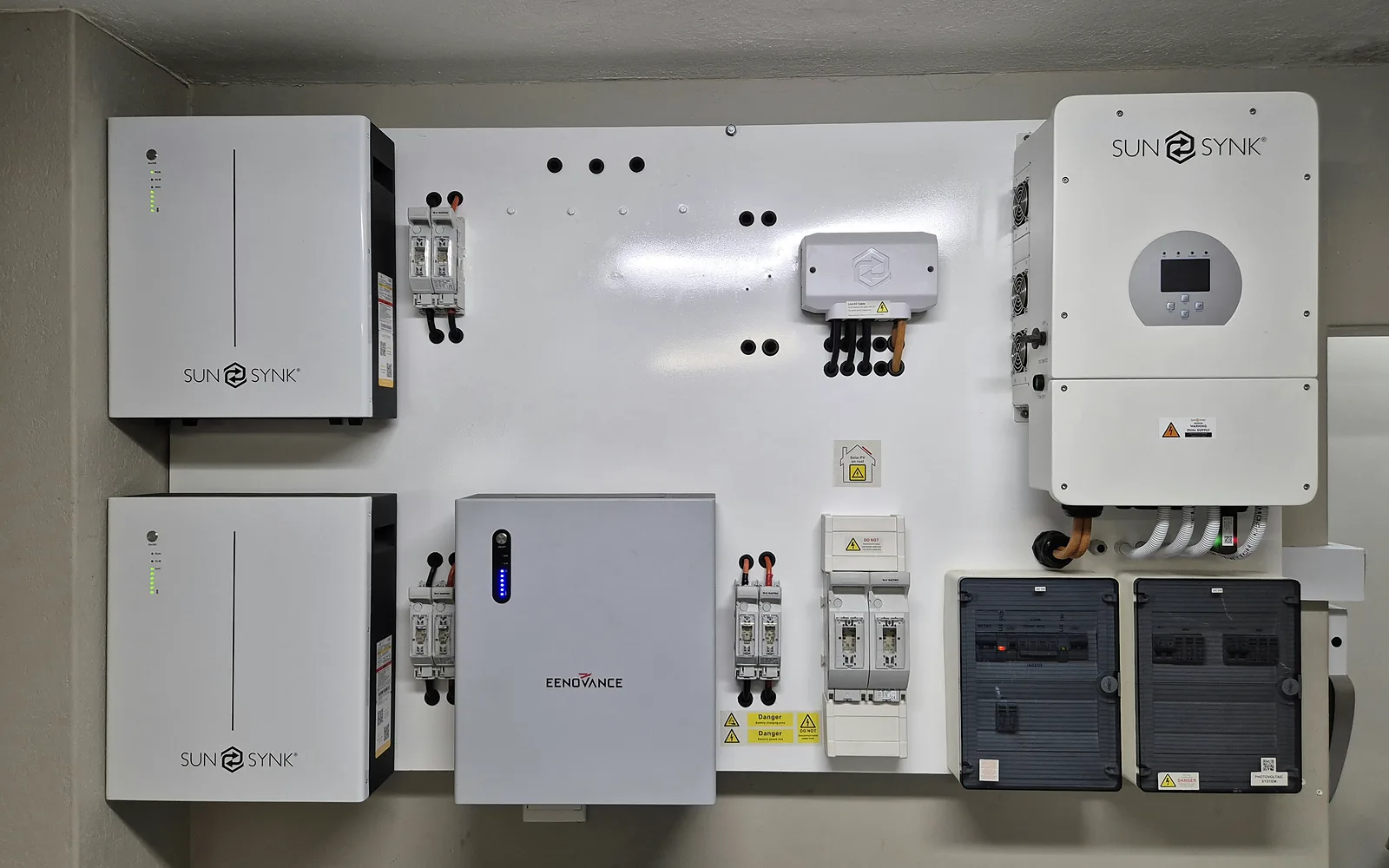
A conventional grid-tied system follows the utility grid and shuts down when the grid is unavailable. A hybrid system adds controls and storage that can isolate selected loads and continue operating, provided the inverter, battery, and backup panel are designed for islanded operation.
Hybrid does not automatically mean “whole-house backup.” Continuous power, surge capability, battery capacity, and the selected emergency circuits define what the system can actually support.
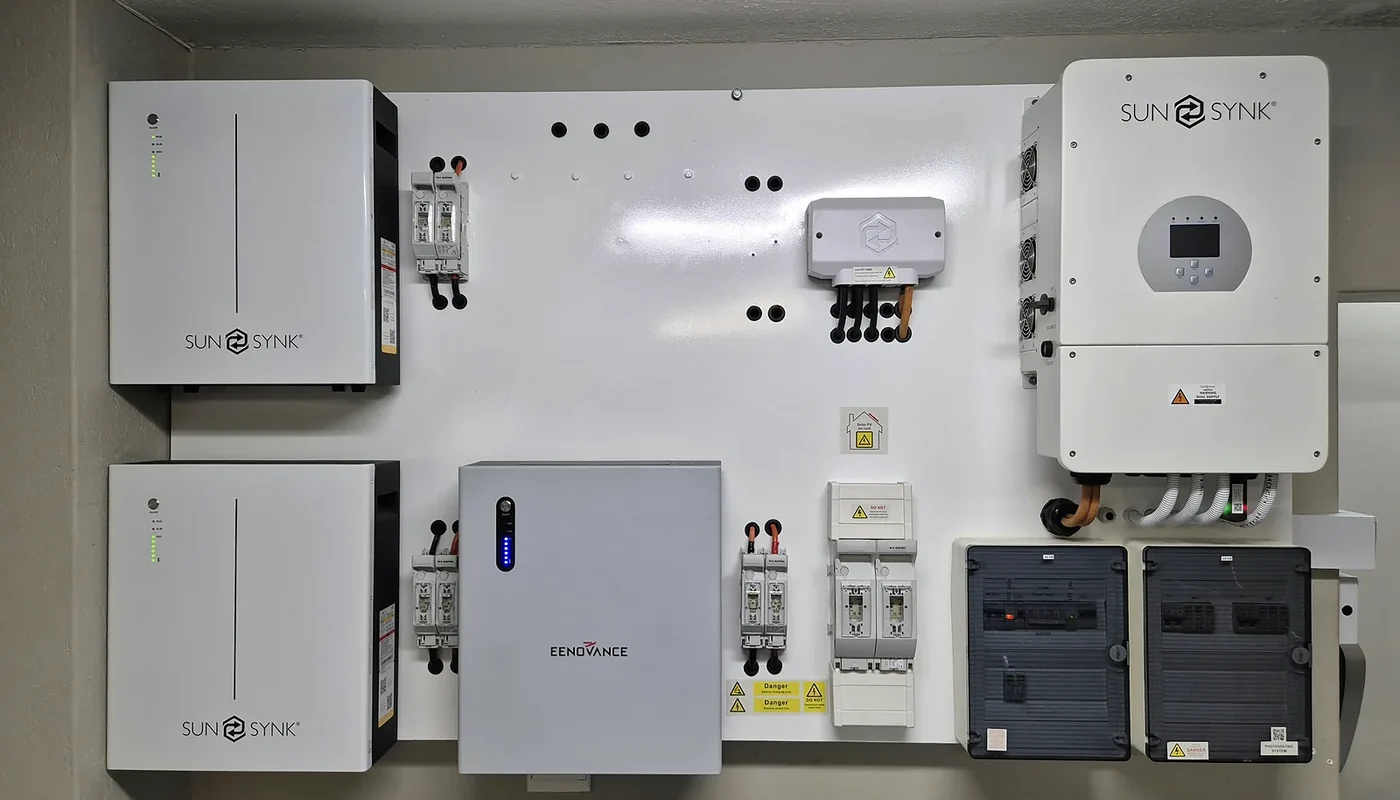
Grid-tied is usually simpler and less expensive.
Hybrid adds battery controls, backup wiring, commissioning, and future battery replacement.
Off-grid operation requires a stricter load and energy-balance design than either option.
Choose the problem before the product
If outages are rare and the main goal is daytime bill reduction, a battery may have weak financial value. If outages interrupt refrigeration, communications, home work, or a business process, resilience may justify the extra cost.
Ask the installer to demonstrate the outage sequence: what disconnects, what remains powered, and what happens when the battery reaches its reserve level.
Write down critical loads before discussing battery size.
Compare grid-tied and hybrid proposals using the same solar array size.
Budget for battery replacement separately from panel lifespan.
Worked example
The same solar array can solve a different problem
A family that rarely loses power may get more value from a simpler grid-tied system. A home-based clinic or shop with frequent outages may reasonably pay more for selected-load backup.
Hybrid is not automatically better; it is better only when the backup use case is worth the added cost and upkeep.
Decision rule
Choose grid-tied for savings first; choose hybrid only after listing the exact circuits and outage hours that must be supported.
Practical checklist
List the circuits you truly need during a brownout instead of assuming the whole house must stay powered.
Compare total installed cost, replacement expectations, and ongoing maintenance.
Ask what the system does during a daytime outage when the battery is low or full.
Choose the simplest architecture that actually matches your reliability needs.
Evidence, scope and limitations
There is no universally better option. The best system is the one that fits your outage needs, load profile, and budget without hiding the trade-offs.
International references are used for engineering and consumer principles. Philippine utility procedures, tariffs, permits and legal requirements must be confirmed using current local rules.
Research record
Sources and further reading
- [1]Solar Photovoltaic System Design BasicsU.S. Department of Energy
- [2]Solar and Resilience BasicsU.S. Department of Energy
- [3]Solar Integration: Solar Energy and Storage BasicsU.S. Department of Energy
Source transparency
Each guide now identifies the publications used for its technical and consumer guidance.
Commercial separation
Installer inclusion, sponsorship, or advertising cannot change editorial conclusions.
Correction and source policy